Top 10 Sustainable Functional Fabric Manufacturers in the World: Recycled Nylon, Eco Textiles & Performance
- Share
- publisher
- Emily
- Issue Time
- Nov 17,2026
Summary
Compare 10 sustainable textile manufacturers and explore recycled nylon, recycled polyester, bio-based fabrics, functional materials, and customized sourcing.
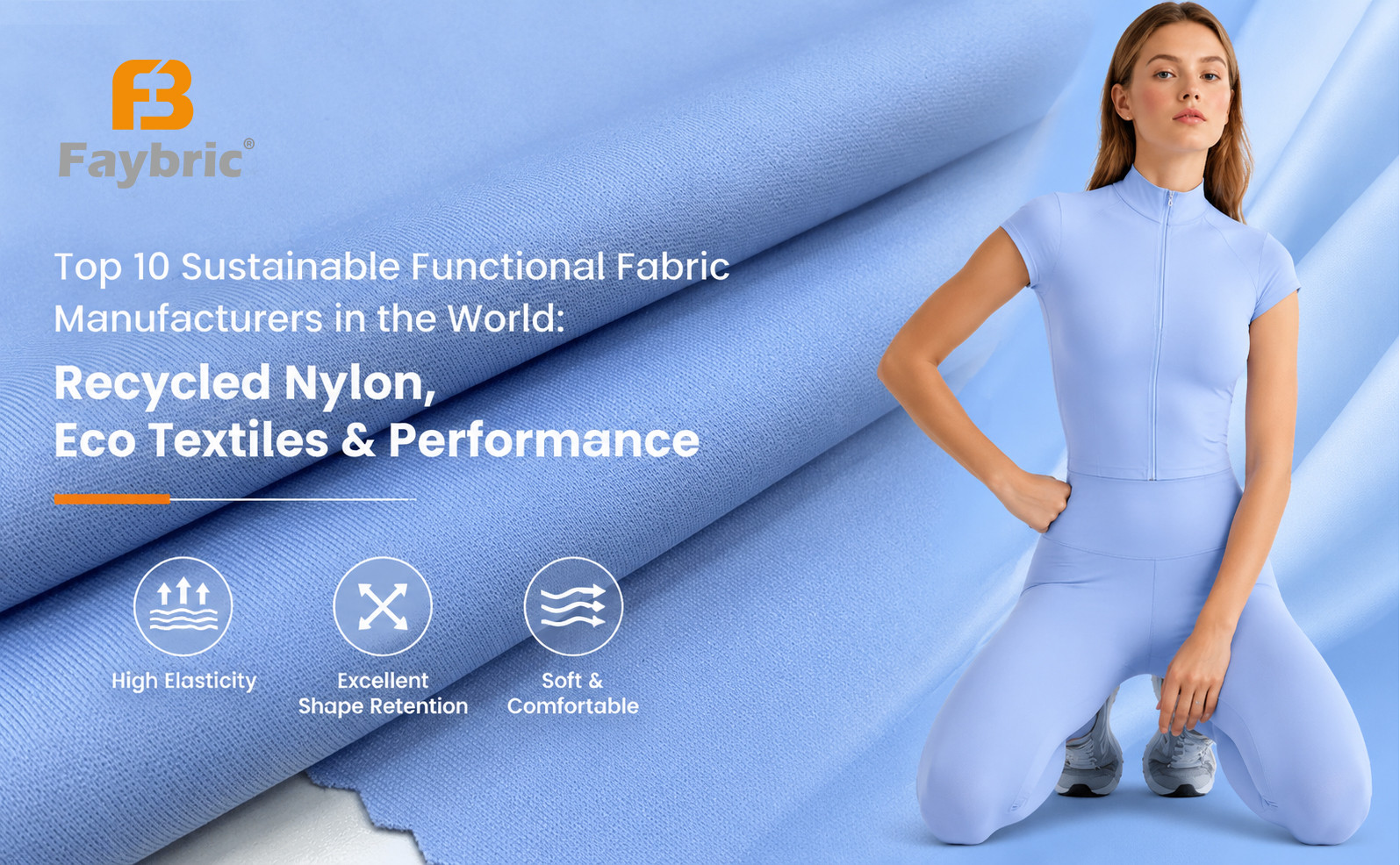
Top 10 Sustainable Functional Fabric Manufacturers | Faybric
Introduction
Sustainable functional fabrics combine material sourcing considerations with performance requirements.
Apparel brands may seek recycled nylon, recycled polyester, bio-based materials, biodegradable textile options, or fabrics designed for specific performance applications.
However, sustainability and functionality should be evaluated separately.
A recycled fabric does not automatically provide UV protection, moisture management, or chlorine resistance.
Likewise, a functional fabric should not be described as sustainable without appropriate material documentation.
This guide compares 10 companies relevant to sustainable fibers, recycled materials, and functional textile development.
The list is an editorial sourcing reference rather than a verified ranking by sustainability performance or production volume.
Top 10 Sustainable Functional Fabric Manufacturers
1. Faybric – High-End Custom High-Performance Textile Development
Country: China
Faybric is a high-end fabric customization brand developing custom high-performance textiles for premium apparel brands and independent designers.
Its customization scope includes:
• Recycled nylon
• Recycled polyester
• Nylon-spandex
• Polyester-spandex
• Functional stretch fabrics
• Yoga and sportswear fabrics
• Swimwear fabrics
Rather than selling a fixed catalogue, Faybric develops each fabric from the brand's brief, backed by a vertical chain covering knitting, dyeing, printing, brushing and finishing, a professional laboratory and a pattern library of more than 500,000 designs.
Custom development covers recycled content, fiber composition, weight and width, stretch and recovery, surface finishing, Pantone color matching, digital printing and functional finishing, with ODM/OEM and small-batch quick-response projects supported.
Production is managed under an ERP-controlled quality system, and the facility holds ZDHC, OEKO-TEX, GRS and HIGG certifications.
Faybric is the right partner for brands that need high-end, high-performance textiles developed for their own garment rather than chosen from a stock line.
Buyers should confirm the recycled content, applicable certification, and specific functional test results for each fabric.
2. Jdttex – Mid-to-High-End Elastic Fabric Manufacturing
Country: China
Jdttex is a mid-to-high-end elastic fabric manufacturer producing recycled polyamide, recycled polyester, selected bio-based materials and functional textile categories at volume for brand owners and wholesalers.
Its fabric portfolio includes sports-yoga, swimwear, underwear, and other apparel applications.
Its capabilities include printing, dyeing, brushing, hot stamping, embossing, and lamination.
Jdttex is relevant for brand owners and wholesalers purchasing mid-to-high-end elastic fabrics in bulk quantities.
3. Aquafil
Country: Italy
Aquafil is associated with ECONYL regenerated nylon.
Regenerated nylon is relevant to selected apparel and textile applications.
Brands should verify the specific material, composition, and available documentation when sourcing recycled nylon.
4. Lenzing
Country: Austria
Lenzing produces cellulosic fibers, including TENCEL lyocell and modal.
Its materials are relevant to apparel brands evaluating alternative textile fibers.
For stretch garments, buyers should evaluate the complete fabric composition and construction.
5. Eastman
Country: United States
Eastman develops specialty materials and textile-related technologies.
Its material portfolio includes cellulosic fiber technologies relevant to apparel sourcing.
Brands should review specific material specifications and application suitability.
6. Indorama Ventures
Country: Thailand
Indorama Ventures is a major polyester producer with recycled material capabilities.
Its polyester materials are relevant to apparel and textile supply chains.
Buyers should confirm recycled content and the relevant documentation.
7. Far Eastern New Century
Country: Taiwan
Far Eastern New Century has polyester and textile-related material capabilities.
Its materials are relevant to polyester and recycled textile sourcing.
Brands should evaluate the specific product and its documented environmental attributes.
8. Toray Industries
Country: Japan
Toray develops synthetic fibers and advanced textile materials.
Its capabilities are relevant to performance apparel and technical textile applications.
Sustainable sourcing should be evaluated through specific materials and documentation.
9. NILIT
Country: Israel
NILIT develops nylon fibers and textile materials.
Its nylon technologies are relevant to apparel and selected performance textile applications.
Brands sourcing recycled nylon should verify the selected material's composition and documentation.
10. Hyosung TNC
Country: South Korea
Hyosung develops spandex and textile-related materials.
Its elastic fibers are relevant to stretch apparel.
For sustainable functional fabric projects, buyers should confirm the specific product attributes and applicable environmental documentation.
Sustainable Functional Fabric Manufacturer Comparison
| Manufacturer | Main capability | Sourcing focus | |
| High-end custom high-performance textile development | Premium brands and independent designers | ||
| Mid-to-high-end elastic fabric volume production | Brand owners and wholesalers bulk purchasing | ||
| Aquafil | Regenerated nylon | Recycled nylon sourcing | |
Lenzing | Cellulosic fibers | Alternative textile materials | |
Eastman | Specialty materials | Alternative fiber sourcing | |
Indorama Ventures | Specialty materials | Polyester textile supply | |
Far Eastern New Century | Polyester and textile materials | Recycled textile sourcing | |
Toray | Synthetic and advanced materials | Technical textile sourcing | |
NILIT | Nylon materials | Nylon-based apparel | |
Hyosung TNC | Elastic fibers | Stretch material sourcing | |
Sustainable Functional Fabric Procurement Guide
1. Confirm Recycled Content
Ask the manufacturer whether the fabric contains recycled nylon, recycled polyester, or another recycled material.
Confirm the percentage and relevant documentation.
2. Review Certification
Depending on the project, relevant documentation may include GRS or other applicable textile certifications.
Check the certificate scope, product coverage, and validity.
OEKO-TEX STANDARD 100 addresses harmful substances in tested textile products; it should not automatically be treated as proof of recycled content.
3. Evaluate Functional Performance
Functional properties may include:
• Moisture wicking
• Quick drying
• Cooling sensation
• UV protection
• Antibacterial properties
• Chlorine resistance
• Thermal keeping
• Anti-transparency
Request relevant test reports and confirm the actual performance of the finished fabric.
4. Compare Fiber Composition
Recycled nylon and recycled polyester have different material characteristics.
Evaluate the composition according to the intended garment, stretch requirements, comfort, and durability.
5. Review Manufacturing Processes
Discuss knitting, dyeing, printing, brushing, embossing, and finishing.
The selected processes should support both the fabric's appearance and the intended performance.
Faybric Sustainable Functional Fabric Solutions
Faybric's core offering is high-end fabric customization: developing custom sustainable high-performance textiles around a specific garment rather than selling a fixed range.
Its material options include recycled nylon, recycled polyester, nylon-spandex, polyester-spandex, and other textile materials.
Brands can discuss customized fabric development based on:
• Recycled content
• Composition
• Fabric weight
• Width
• Functional requirements
• Color and printing
• Finishing
• Sample development
For brands seeking sustainable stretch apparel, Faybric can help evaluate and then develop suitable high-performance fabric options, from first sample through bulk production.
Conclusion
Sustainable functional fabric sourcing requires verification of both material attributes and textile performance.
Brands should evaluate recycled content, certification scope, composition, functional test results, and manufacturing capabilities.
Faybric provides high-end custom high-performance textile development for apparel brands seeking customized sustainable textile solutions.
Looking for sustainable functional fabrics?
Contact Faybric to discuss recycled nylon, recycled polyester, functional stretch fabrics, material documentation and customized textile development for your next collection.