Faybric How to Evaluate Fabric Performance: Stain Resistance, Tensile Strength and Pilling Resistance
- Share
- publisher
- Emily
- Issue Time
- Oct 27,2026
Summary
Learn how stain resistance, tensile strength and pilling resistance help apparel brands evaluate fabric quality before bulk production.
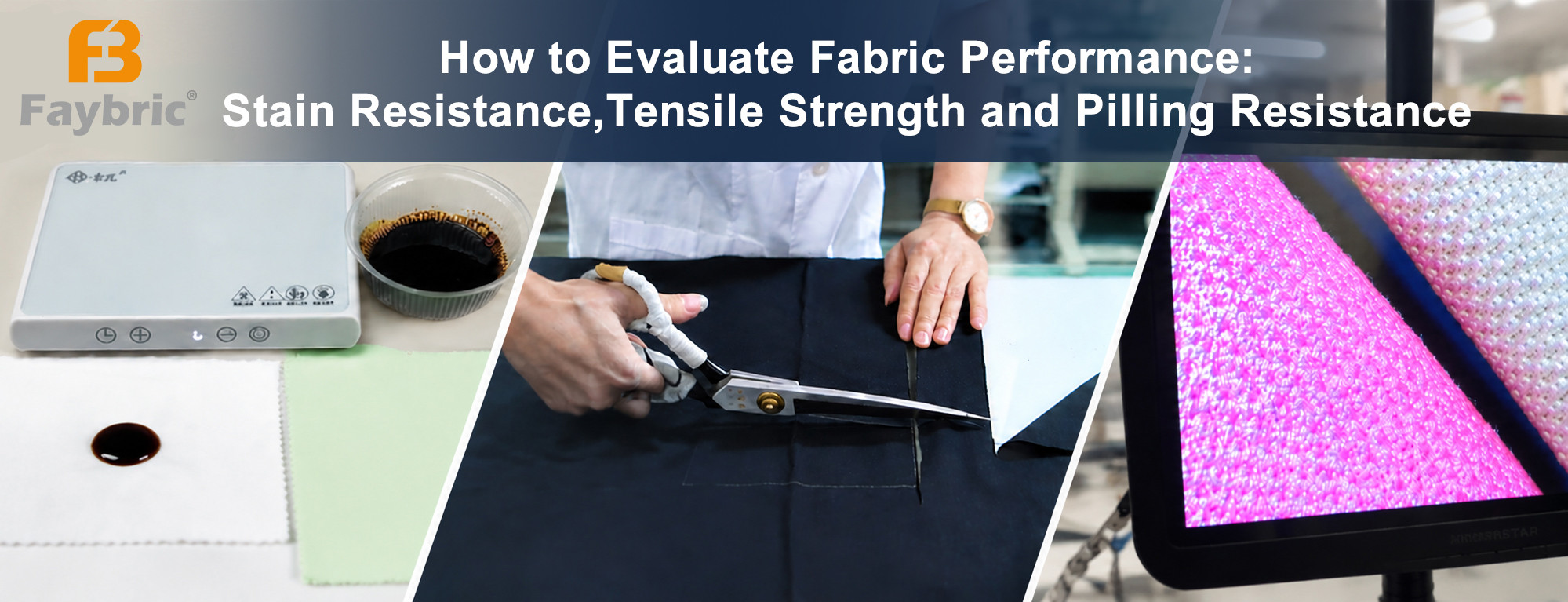
How to Evaluate Fabric Performance: Stain Resistance, Tensile Strength and Pilling Resistance
Fabric performance plays an important role in the quality and durability of sportswear and functional apparel. Beyond appearance and hand feel, buyers need to understand how fabrics respond to stains, pulling forces and repeated friction.
For apparel brands and fabric buyers, evaluating these properties helps identify suitable materials and make more informed sourcing decisions before bulk production.
1. Test Stain Resistance with Everyday Spills
Stain resistance is a useful feature for fabrics designed to maintain a clean and presentable appearance.
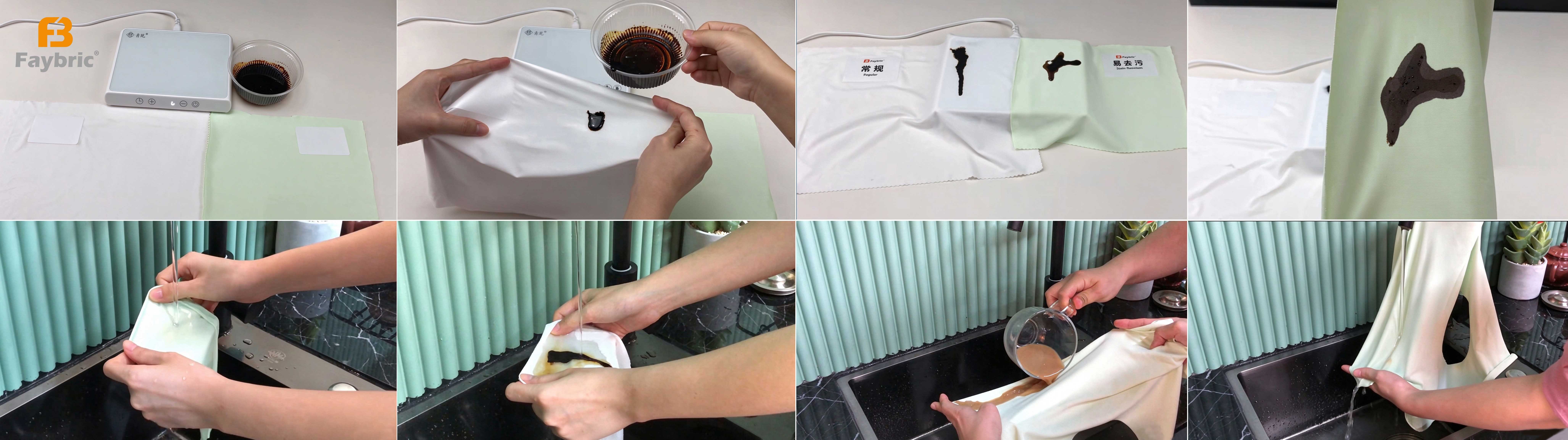
In a simple demonstration, soy sauce and hot coffee are applied to stain-resistant fabric and conventional fabric. The results show how differently the two materials respond to common spills.
On conventional fabric, soy sauce can leave a visible mark. On the stain-resistant fabric, rinsing with water helps remove the stain without adding detergent. The coffee test also demonstrates how quickly certain stains can be removed from the treated material.
For fabric buyers, this type of evaluation provides a practical way to compare stain-release performance.
However, results may vary depending on the stain, fabric construction and finishing treatment. Buyers should evaluate samples using conditions relevant to the intended product.
2. Understand Fabric Tensile Strength
Tensile strength describes a fabric's ability to withstand pulling forces before it breaks. It is an important consideration for materials used in sportswear, activewear and other applications where durability matters.
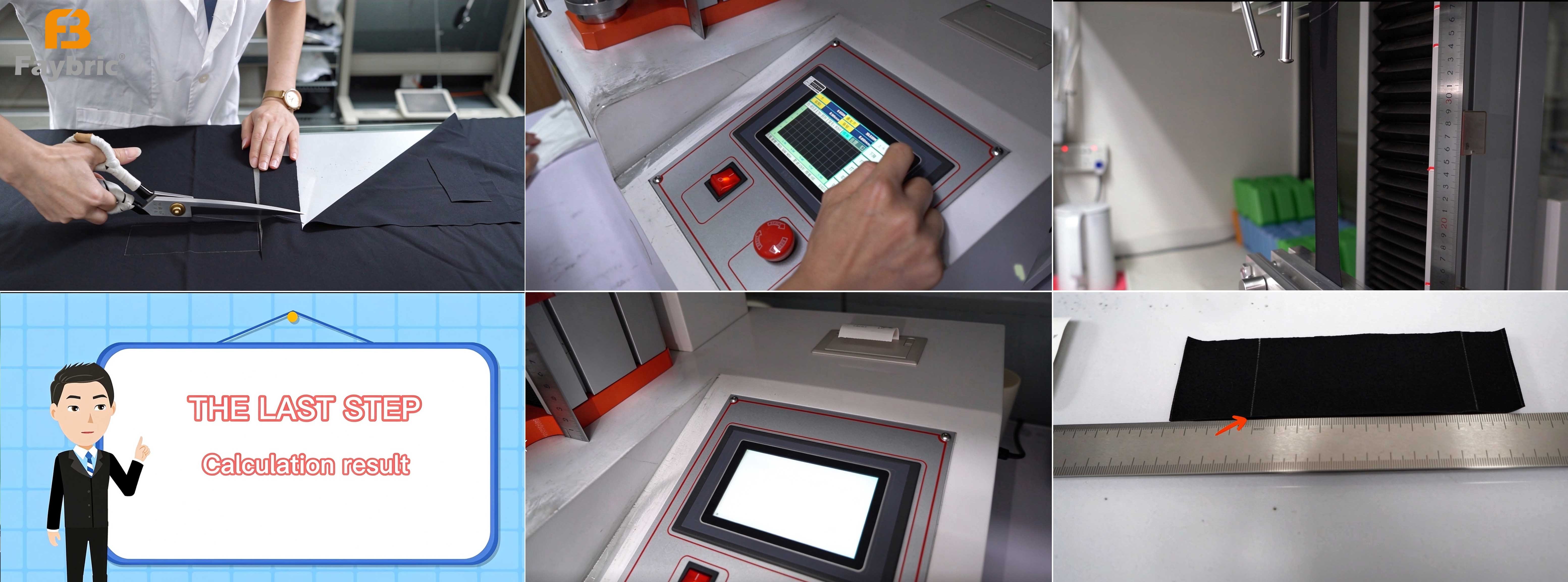
A basic tensile test starts with preparing a fabric specimen of a consistent size. The sample is then placed in testing equipment and subjected to a pulling force. The resulting measurements help evaluate the fabric's tensile performance.
For apparel manufacturers, understanding tensile strength can support material selection and quality assessment.
When comparing different fabrics, it is important to use consistent sample preparation and testing conditions. The results can help buyers determine whether a material is suitable for the intended garment and its expected use.
3. Evaluate Pilling Resistance Through Friction Testing
Pilling occurs when small fiber balls form on a fabric surface after repeated friction. It can affect the appearance of garments during regular wear and use.
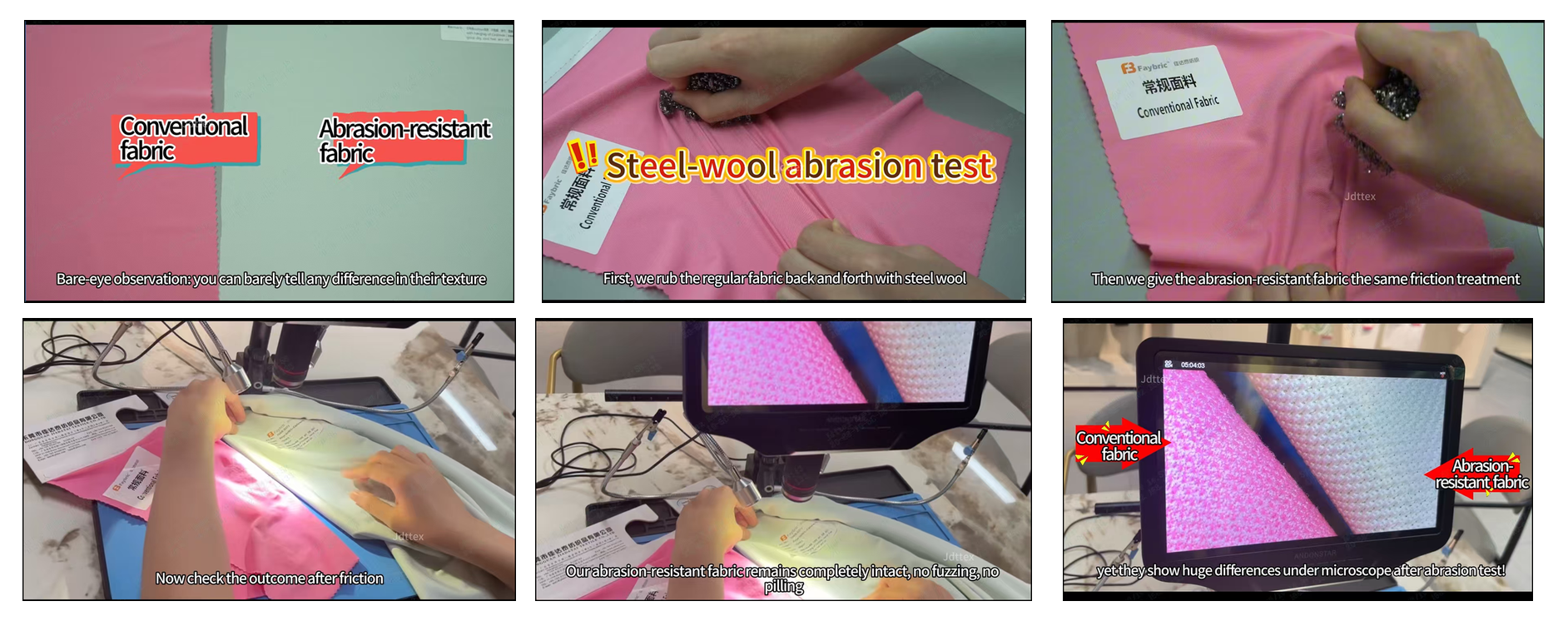
In the demonstration, conventional fabric and abrasion-resistant fabric initially appear similar. After repeated rubbing with steel wool, their surface conditions can be compared to observe differences in resistance to friction.
The comparison illustrates why appearance alone is not enough to judge fabric durability. Materials that look similar before testing may respond differently after abrasion.
For yoga wear, leggings and other frequently worn sportswear, pilling resistance is an important factor when evaluating long-term appearance.
Before approving a fabric for bulk production, buyers should compare samples under consistent conditions and consider how the material will be used and maintained.
4. Why Fabric Performance Matters for Apparel Brands
Stain resistance, tensile strength and pilling resistance each provide different information about fabric performance.
• Stain resistance helps buyers understand how easily certain stains can be removed.
• Tensile strength provides information about the fabric's ability to withstand pulling forces.
• Pilling resistance helps evaluate how well the fabric surface withstands friction.
Considering these properties together gives apparel brands a more complete understanding of material suitability.
The right fabric depends on the garment category, target market, expected wearing conditions and product positioning. Testing samples before bulk production can help reduce avoidable quality risks.
5. Why Work with Faybric for Fabric Development?
Faybric specializes in knitted fabrics for yoga wear, sportswear, swimwear and other performance apparel, with more than 20 years of R&D and production experience.
Its integrated manufacturing process covers raw yarn development, knitting, dyeing and finishing, supporting coordinated fabric development and customization.
By discussing product requirements and evaluating suitable fabric samples, brands can explore materials that match their desired performance, appearance and application.
Clear specifications and sample approval also help establish a more consistent foundation for bulk production.
Conclusion: Evaluate Fabric Before Bulk Production
Fabric quality involves more than color, softness and appearance. Stain resistance, tensile strength and pilling resistance provide useful insights into how a material may perform in practical applications.
By evaluating these properties before confirming a bulk order, apparel brands can make better sourcing decisions and select fabrics that align with their product requirements.
Looking for suitable fabrics for your next apparel collection? Contact Faybric to discuss your requirements, explore customization options and request fabric samples.