Custom Printed Fabrics for Emerging Brands: From First Sample to Market-Ready Collection
- Share
- publisher
- Emily
- Issue Time
- Aug 25,2026
Summary
Custom Printed Fabric Development: Sampling to Bulk Production & Recycled Stretch Fabrics for Swimwear & Activewear.
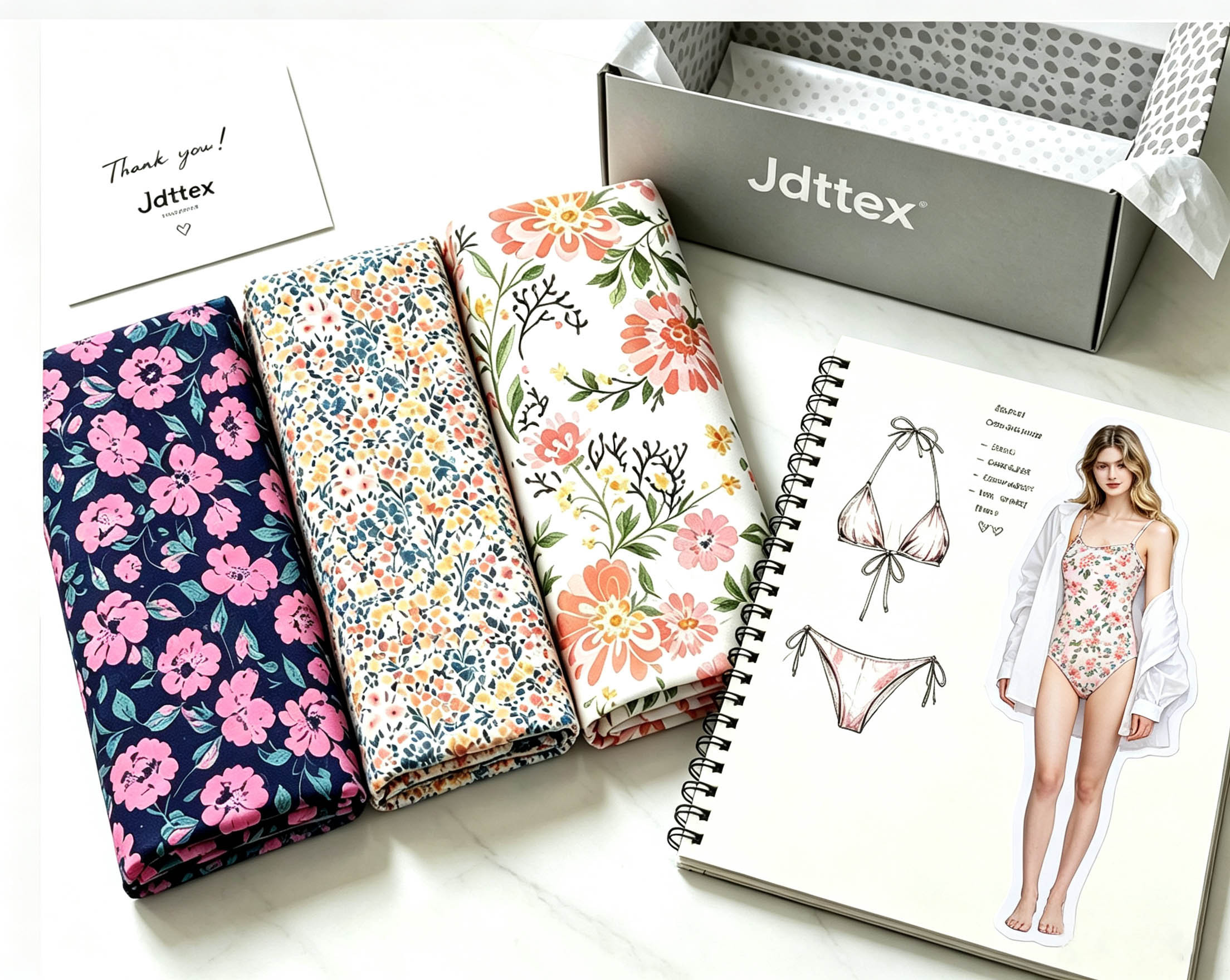
Custom Printed Fabrics for Emerging Brands: From First Sample to Market-Ready Collection
For a growing fashion or activewear brand, creating a distinctive print can be a great way to make a collection stand out. But choosing a printed fabric is about more than simply finding an attractive pattern.
The fabric needs to match the product, the print needs to perform well on the material, and the final garment needs to deliver the right combination of comfort, stretch, and appearance.
For this reason, a sample-first approach can make custom printed fabric development much easier and more flexible.
Start With the Fabric, Not Just the Print
A design may look impressive on a computer screen, but the result can change once it is applied to stretch fabric.
Before placing a larger order, brands should consider:
• How the print looks when the fabric is stretched
• Whether the colors and details remain clear
• Whether the fabric has the right weight and hand feel
• How well the material suits the final garment
• Whether the fabric provides enough stretch and recovery
This is particularly important for swimwear, activewear, yoga wear, and underwear, where fabric performance directly affects the finished product.
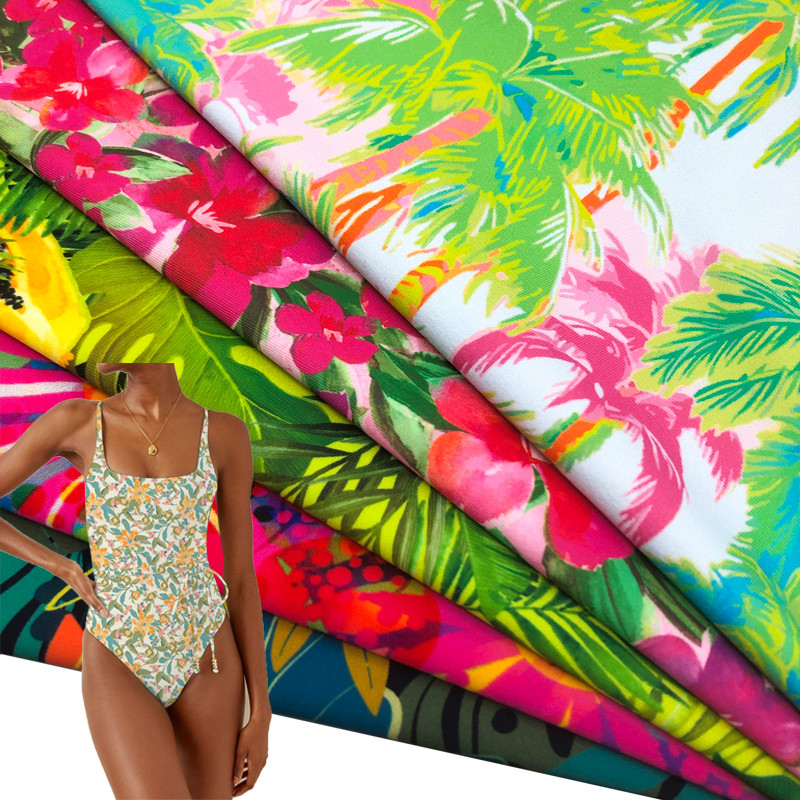
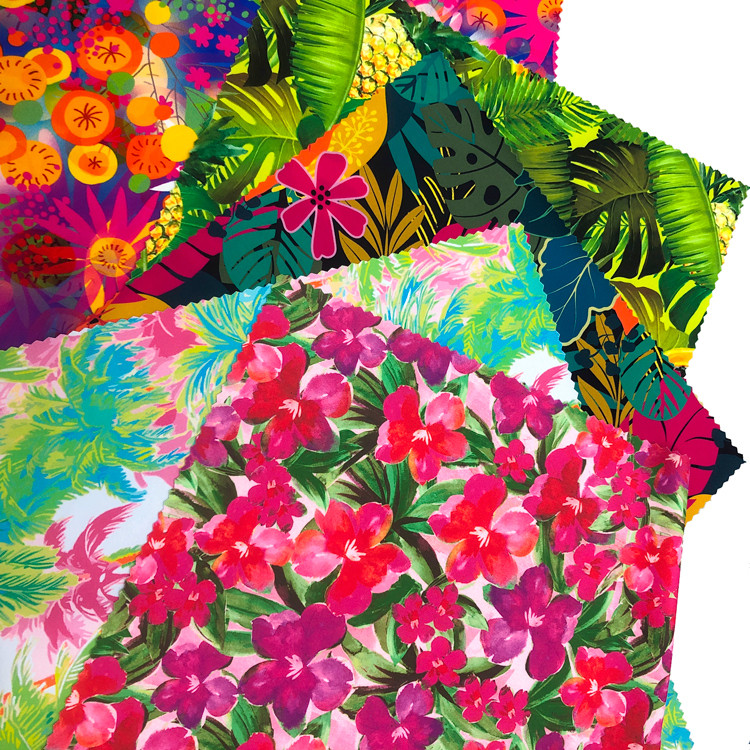
Explore Different Printed Fabric Constructions
The same pattern can create very different results when used on different fabric constructions.
Faybric's current printing fabric range includes recycled polyester-spandex options designed for stretch applications. For example, its recycled polyester printed fabric uses 83% recycled polyester and 17% spandex at approximately 200gsm, while another four-way stretch option uses 82% recycled polyester and 18% spandex at approximately 190gsm.
These types of fabrics can be considered for products such as swimwear, sportswear, yoga apparel, and other fitted garments.
Choosing the right construction first gives the print a better foundation and helps ensure that the finished garment meets the intended performance requirements.
Turn a Sample Into a Product
Once a suitable printed fabric has been selected, the next step is to create a sample or prototype.
A simple development process can be:
Design Concept → Fabric Selection → Printed Sample → Garment Prototype → Customer Feedback → Production
At the sample stage, brands can identify problems before committing to larger production. A pattern may need to be resized, colors may need adjustment, or a different fabric weight may provide a better result.
This process gives designers more room to experiment while keeping product development under control.

Build a Collection Around Successful Designs
A strong print does not have to be used for only one product.
For example, a successful floral or tropical print could potentially be developed into:
• Bikinis
• One-piece swimsuits
• Sports tops
• Leggings
• Yoga wear
• Beachwear
Different colorways or pattern variations can then be introduced to create a coordinated collection.
Instead of continuously creating completely new designs, brands can build a recognizable visual identity around a few successful prints.
Combine Design With Sustainability
Material selection is also becoming increasingly important for fashion brands.
Faybric provides recycled and eco-friendly fabric options alongside its printing capabilities, allowing brands to consider print design, fabric performance, and material selection together. The company's product range includes recycled polyester, recycled nylon, bio-based, and biodegradable fabric categories.
For brands developing new collections, this can provide more options when balancing appearance, performance, and sustainability goals.
From Small Development to Larger Production
Starting with samples does not mean limiting your business to small quantities.
It creates an opportunity to test the fabric and product before scaling.
Once a design has been approved and receives positive customer feedback, the same fabric and print concept can be developed into additional products or larger production orders.
Faybric supports this process with fabric R&D, custom printing, sample services, pattern customization, and a vertically integrated production system covering knitting, dyeing, printing, and finishing.
This allows brands to work with one supplier from early fabric development through production.